
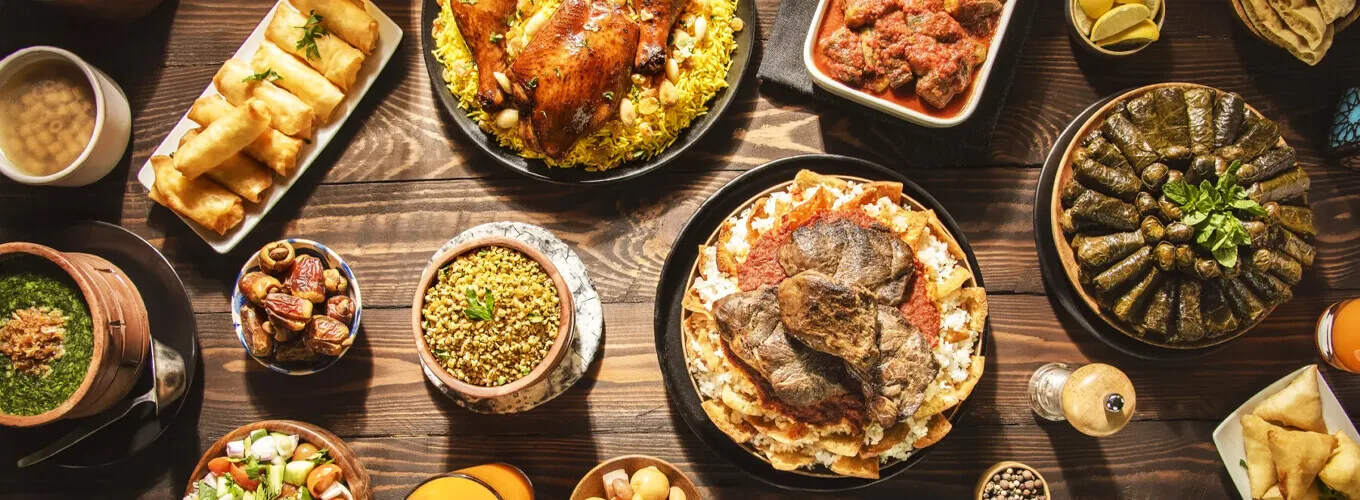
Traditional Egyptian dishes to try include koshari (rice, pasta and lentils with tomato sauce), ful medames (stewed fava beans), taameya (Egyptian falafel), molokhia, stuffed vegetables (mahshi), grilled kebab and kofta, and sweet treats like basbousa and om ali.
Egyptian cooking rarely shows off, and that is exactly its charm. Instead of rare ingredients or fiery heat, it builds bold, deeply satisfying meals from the most everyday staples: fava beans, rice, lentils, tomatoes, garlic and mountains of warm bread for scooping. These are the dishes that feed millions of people every day, yet many travellers arrive knowing little about them.
Think of this as a friendly roadmap to the classics, what to order first, how each dish is served, and when locals actually eat it. By the end you will know which plates are hearty and meaty, which are naturally vegetarian, and which sides, from tangy pickles to a squeeze of lemon, complete the bite. Here are twelve traditional Egyptian foods worth seeking out.
Why try traditional Egyptian food?
The genius of Egyptian cuisine is transformation: garlic, tomatoes and a handful of herbs become the backbone of rich, homely meals through long simmering, hot-oil frying and slow oven-baking. The spicing leans aromatic rather than hot, cumin, coriander and garlic lead, while a splash of tomato-vinegar sauce or a squeeze of lemon brightens the heavier plates.
You will notice satisfying contrasts throughout: crisp fried onions against silky stews, hearty legumes beside fresh vegetables. Whether you eat at a humble street counter or around a family table, the same comforting flavour language runs through it all, approachable, generous and built for sharing.
1. Koshary: Egypt’s National Comfort Bowl
If one dish sums up Egyptian food, it is koshary. This gloriously humble bowl stacks rice and brown lentils with macaroni and thin spaghetti, adds a scatter of chickpeas, and crowns the lot with crispy fried onions. It is sold everywhere, from busy street counters to dedicated koshary restaurants.
The real magic lies in the condiments: a spiced tomato sauce, a tangy vinegar-garlic dressing, and a fiery chilli sauce for those who want heat. Koshary is entirely vegetarian yet genuinely filling, thanks to the complete protein you get from combining grains and legumes. Ask for the sauces on the side if you like to control the acidity and spice, and tweak the ratios, more lentils for earthiness, extra onions for crunch, until it suits you.
2. Ful Medames: The Slow-Cooked Fava Breakfast
Ful medames is Egypt’s breakfast institution, fava beans simmered for hours until soft, then mashed at the table and dressed with garlic, cumin, lemon juice and a generous pour of olive oil. It is spoonable, endlessly customisable and served hot from morning carts and cafes across the country. Scoop it up with warm baladi bread, or order it stuffed into a pita with salad and pickles for a portable start to the day.
3. Ta’amiya: Egypt’s Green Falafel
Where much of the region makes falafel from chickpeas, Egypt uses fava beans, and the difference is delicious. Mashed favas are blended with onions, parsley, coriander and spices, then fried until the outside is crisp and the interior stays fluffy, green and herb-forward, lighter than many chickpea versions. Ta’amiya is best eaten fresh from the fryer, tucked into pita with tahini, tomato and cucumber, and topped with pickles or a drizzle of chilli oil. Ask for extra tahini for creaminess or another wedge of lemon for tang.
4. Molokhia: The Garlicky Green Stew
Molokhia is made from finely chopped jute mallow leaves cooked into a garlicky broth that turns silky and slightly viscous, a texture that surprises first-timers and then wins them over. The flavour is savoury and herb-forward rather than spicy, with an upfront, comforting hit of garlic.
It is almost always served over hot rice, with roasted or stewed chicken (or sometimes rabbit) on the side, and bread for scooping up every last spoonful. If you love garlic, this is likely to become a favourite, and a squeeze of lemon brightens the bowl and cuts through the richness. Trust the flavour first; the unusual texture tends to grow on you fast.
5. Mahshi: Vegetables Stuffed with Spiced Rice
Mahshi turns everyday vegetables into fragrant parcels. Zucchini, aubergine and bell peppers are hollowed and filled with a spiced rice mix of onions, herbs and tomato, while grape leaves (warak enab) and cabbage leaves are rolled snugly around the same filling and simmered in a tomato base.
Some families fold minced beef into the stuffing for extra richness, but many trays stay proudly vegetarian so the vegetables remain the star. Slow baking or simmering lets the rice drink up the pan juices until every roll is full of flavour. The best mahshi is fork-tender but still holds its shape, and a final squeeze of lemon lifts the whole plate. It is a communal dish, equally at home at a casual family lunch or a special gathering.
6. Hawawshi: Crispy Bread Packed with Spiced Beef
Hawawshi is Egyptian street food at its most satisfying: a pita-like loaf stuffed with ground beef, chopped onions, peppers and warm spices, then pressed and roasted until the crust chars and crackles. As it cooks the fat renders, keeping the inside juicy while the outside crisps.
You eat it like a sandwich that delivers two pleasures at once, a crackly shell and a succulent centre. It is best served hot with pickles to cut the richness; ask for extra chillies if you like heat or caramelised onions for a sweeter note. Great for sharing in theory, though one portion tends to vanish quickly.
7. Hamam Mahshi: Stuffed Grilled Pigeon
Hamam mahshi, stuffed pigeon, is a celebratory centrepiece across Egypt. The small birds are packed with seasoned rice or nutty freekeh, then roasted until the skin turns deeply browned and crisp, so each portion pairs tender meat with savoury grains.
The seasoning stays focused and aromatic rather than heavy: garlic, mild herbs and warm spices highlight the bird’s slightly gamey note. When cooked well, the interior stays moist while the exterior crisps just right. It is prized at special gatherings as a mark of care, so order one to share with a few simple sides. A squeeze of lemon or a spoonful of the pan juices brightens the plate, a rewarding choice if you like to sample something a little more adventurous.
8. Shawarma: The Rolled Classic
Shawarma is shaved lamb or chicken carved from a slowly turning vertical spit. Vendors often toss the slices on a hot grill with chopped tomato, onion and parsley before rolling everything into flatbread. Ask for extra tomato sauce or chillies if you like it punchy. It is a fast, familiar favourite, and a reliable first step for anyone easing into Egyptian street food.
9. Kebab and Kofta: Egypt’s Grilled Duo
These two are the stars of any Egyptian grill. Kebab features chunky cubes of meat charred over glowing coals, while kofta uses spiced ground meat pressed onto skewers so the seasoning is locked right in. Both deliver that smoky, char-grilled bite and are usually served with bread, salad and dips. Look for a busy grill with high turnover, it is the surest sign of fresh, well-cooked meat.
10. Alexandrian Kebda: The Coastal Liver Sandwich
A speciality of the coastal city of Alexandria, kebda is liver sauteed with peppers, garlic and spices, then stuffed into a warm bun as a gloriously messy, peppery sandwich. Add pickles for crunch or a dash of hot sauce for zing. It is bold, punchy and a favourite among locals who know exactly which counter does it best.
11. Breads, Pickles and Sides
No Egyptian meal feels complete without its supporting cast. Warm baladi pita arrives before the mains and shapes how you eat everything that follows, while fiteer, a flaky layered pastry, comes plain, filled with cheese, or dusted with sugar as a sweet treat.
Torshi pickles, cucumbers, carrots, cauliflower and peppers, add a bright, acidic snap that refreshes the palate between rich bites, and a simple chopped salad brings crunch and balance. Many places also offer garlicky dips that pair beautifully with grilled meats and stews. Even at a street stall, bread and pickles usually arrive by default, so use them to build neat, balanced mouthfuls, and never skip the sides in a restaurant; they round out every course.
12. Egyptian Sweets: Save Room
Egyptian desserts revolve around syrup, pastry and patience. Basbousa is a semolina cake soaked in syrup for a tender, gently sweet crumb, while kunafa uses fine shredded pastry that crisps on the outside around a gooey centre of nuts, cream or even mild cheese.
Om Ali is Egypt’s beloved bread pudding, warm layers of flaky pastry baked in milk with nuts and raisins, rich but never fussy. Baklava stacks pastry and ground nuts and drenches the slice in fragrant syrup for a crunchy, nutty, sugary finish. If the syrup feels heavy, ask for a lighter drizzle, and share a few plates so you can compare tender cake, crisp strands, flaky layers and creamy pudding without overdoing it. All of them pair perfectly with Egyptian coffee or a glass of mint tea.
The Flavour Trio: Tomato, Garlic and Lemon
Once you have eaten a few of these dishes, a pattern emerges. A well-seasoned tomato sauce turns plain rice or stuffed vegetables into something layered and comforting; garlic appears everywhere, from a quick sizzle in hot oil to a bold vinegar-garlic dressing; and a squeeze of lemon keeps slow-cooked stews and grilled meats feeling lively rather than heavy. Recognise that trio, along with cumin, coriander and good olive oil, and you will understand the flavour language behind most of Egypt’s memorable plates.
Eating Like a Local
Start the day at busy morning stalls, where ful and ta’amiya set the tone, and save koshary, grilled meats and stews for later when the kitchens are in full swing. Portions are generous, so split a couple of mains and add sides to sample widely without overfilling. If you are short on time, treat a meal as a mini food tour: pick one signature plate and one street snack for variety.
A few habits help you order well. Ask for sauces on the side so you control the heat and tang, move quickly at busy lunchtime counters, and never be shy about asking what is fresh off the grill, high turnover almost always means tastier bites and better value.
Final Thoughts
The simple rule for eating your way through Egypt is this: start modest, expand boldly, and share often. Begin with the comforting anchors, koshary, ful and ta’amiya, then add one new dish each meal, from molokhia and mahshi to hawawshi and stuffed pigeon. Balance hearty mains with bright sides, leave space for a sweet flight of basbousa, kunafa, om ali or baklava, and pay attention to what you love. More than any single plate, it is the way these meals bring people together that you will remember.