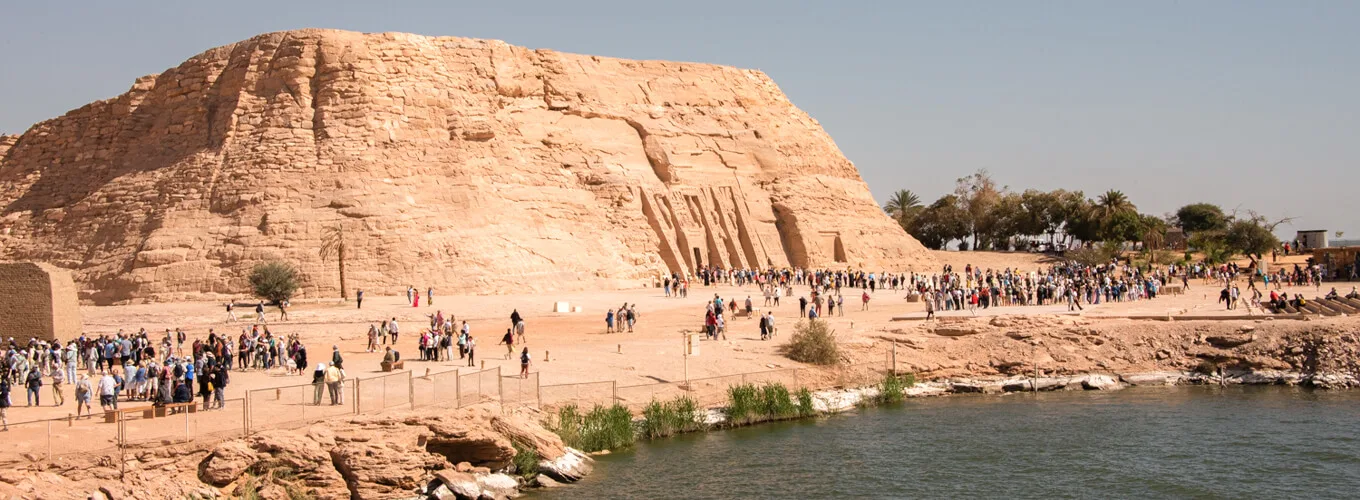
Ancient Egyptian temples were monumental stone complexes built as houses for the gods and centres of ritual. The most famous include Karnak and Luxor Temple, Philae and Abu Simbel near Aswan, Edfu, Kom Ombo and Dendera, most of them lining the Nile in southern Egypt.
Rising from the desert like fortresses of stone, the ancient Egyptian temples are among the most powerful reminders of a civilisation that placed the gods and the afterlife at the very centre of daily life. Far more than places of prayer, these vast complexes were seen as models of the ordered universe, stages for sacred ritual, and public statements of the pharaoh’s divine right to rule. Every wall, column and gateway carried meaning — and much of it still survives for us to read today.
What were ancient Egyptian temples used for?
Egyptian temples served several overlapping purposes. Some were dedicated to great deities such as Amun-Ra, the sun god, or Osiris, ruler of the underworld. Others functioned as mortuary temples, where the cult of a deceased pharaoh was maintained and offerings ensured a smooth passage into eternity. Whatever their focus, the design followed a consistent logic: towering entrance pylons marked the boundary between the everyday world and the sacred, hypostyle halls of massive columns filtered the light, and the innermost sanctuary — reserved for priests and the king — lay in shadowy, mysterious half-darkness.
The Main Types of Egyptian Temple
Mortuary Temples
Built to honour and sustain a pharaoh after death, mortuary temples linked the earthly and divine realms and hosted the rituals that kept the royal spirit alive. The elegant terraces of the Mortuary Temple of Hatshepsut at Deir el-Bahri are among the most striking examples.
Sun Temples
Dedicated to the sun god Ra or Amun-Ra, these temples were designed to catch and channel sunlight, celebrating the daily rebirth of the sun. Several date to the Old Kingdom, though many now survive only as ruins.
Cult and “Mystery” Temples
Some temples were centres of initiation and transformation, where secret rites unfolded away from public view. The unusual double temple of Kom Ombo, with its twin sanctuaries honouring two gods side by side, hints at the layered religious life these buildings contained.
How Temple Design Changed Over Time
Egyptian architecture was never frozen in place. During the Old Kingdom, temples formed part of the great pyramid complexes. The Middle Kingdom brought richer decoration and the wider use of mudbrick alongside stone. The New Kingdom is the age of the colossal — enormous hypostyle halls, forests of columns and monumental statues. Later, under the Ptolemies and Romans, Egyptian forms blended with Greco-Roman styles, producing beautifully preserved temples such as Edfu and Dendera.
Reading the Symbols
- Hieroglyphs: The carved script that covers temple walls records myths, honours the gods and guides the dead through the afterlife.
- The lotus flower: A symbol of purity and rebirth, echoing the life-giving flood of the Nile.
- The scarab beetle: Associated with the rising sun and the endless cycle of renewal.
- The winged sun disk: Combining the falcon god Horus with the sun, it linked the pharaoh directly to divine power.
- Statues and sphinxes: Royal statues reinforced the idea of divine kingship, while sphinxes stood guard against hostile forces.
Temples You Should Not Miss
Grand and Unmissable
- Karnak Temple (Luxor): An enormous open-air complex of halls, obelisks and chapels built over many centuries — walk beneath its towering columns and along the Avenue of Sphinxes.
- Luxor Temple (Luxor): Set on the east bank of the Nile, its dramatic pylon entrance and sunlit courtyards are especially magical after dark when the temple is illuminated.
- Abu Simbel: The colossal rock-cut temples of Ramses II, relocated stone by stone to save them from the rising waters of Lake Nasser — a UNESCO World Heritage marvel.
For History Enthusiasts
- Mortuary Temple of Hatshepsut (Deir el-Bahri): A terraced masterpiece rising against desert cliffs, built for one of Egypt’s few female pharaohs.
- Kom Ombo Temple: A rare double temple shared between Sobek the crocodile god and Horus the falcon god.
- Edfu Temple: One of the best-preserved temples in the country, offering a vivid picture of the Ptolemaic era and the cult of Horus.
For Deeper Study
- Valley of the Kings (West Thebes): The rock-cut royal tombs of the New Kingdom, decorated with funerary texts that reveal Egyptian beliefs about the afterlife.
- Temple of Seti I (Abydos): A beautifully preserved temple of Osiris, rich with finely carved reliefs.
- Dendera Temple: Famous for its remarkably preserved painted ceilings and astronomical imagery, ideal for anyone interested in Egyptian cosmology.
Planning Your Temple Journey
Most of Egypt’s greatest temples line the Nile between Luxor and Aswan, which is exactly why a Nile cruise or a well-planned Luxor and Aswan itinerary is such a rewarding way to see them. Visit early in the morning or late in the afternoon to avoid both the crowds and the fiercest heat, carry water and sun protection, and consider a knowledgeable guide — the carvings come alive when someone can explain the stories behind them.
The Lasting Appeal of Egypt’s Temples
The temples of the Nile Valley remain silent witnesses to a world of faith, ritual and extraordinary artistry. They were the beating heart of ancient Egyptian life, where kings sought the favour of the gods and ordinary worshippers brought their offerings. To stand among their columns today is to step directly into that ancient world — and to understand why these monuments continue to inspire awe thousands of years after the last prayers were spoken.