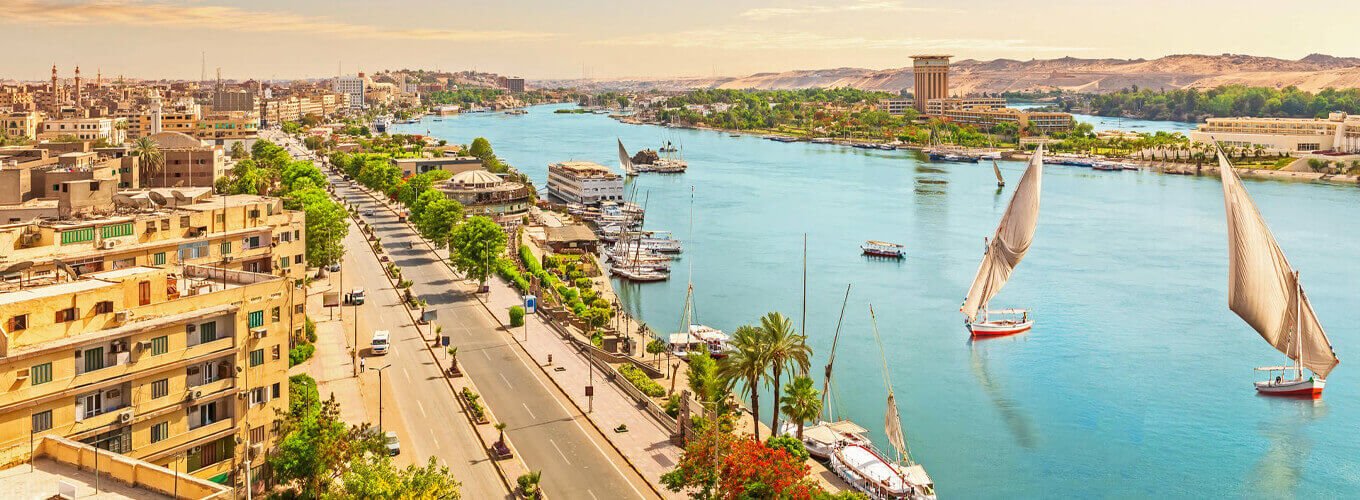
Aswan’s must-see attractions include the beautiful island Temple of Philae, the High Dam, the Unfinished Obelisk, the Nubian Museum and colourful Nubian villages, plus a sunset felucca sail. Many visitors also take a day trip south to the great temples of Abu Simbel.
Ask any seasoned traveller which stretch of Egypt lingers longest in the memory, and a surprising number will name Aswan rather than the headline sights further north. Here the Nile slows, spreads wide between granite outcrops and palm-fringed islands, and the desert light turns everything gold at the edges of the day. It is a place that rewards a slower gear: temples in the morning, river drifting in the afternoon, and tea on a terrace as the sun sinks. This guide walks you through the city’s finest attractions and, just as importantly, how to string them together so your visit feels full rather than frantic.
Whether you have a single afternoon between a Nile cruise and a flight, or a couple of unhurried days to explore, you will find a rhythm here that suits how you actually like to travel. Below, each site comes with concise context and honest, practical notes on timing, transport, and where the best light falls.
Why visit Aswan?
Aswan sits at Egypt’s southern gateway, where Pharaonic history, Nubian culture, and modern engineering all meet on the same bend of the river. Within easy reach you have some of the country’s most moving monuments, from the colossal temples of Abu Simbel to the island sanctuary of Philae, yet the pace never feels as pressured as Luxor or Cairo.
The real draw, though, is the balance. You can spend a morning tracing ancient chisel marks in a granite quarry and an afternoon watching feluccas lean into the breeze. Nubian villages add colour, music, and warm hospitality, while the surrounding desert gives the whole city a clean, luminous quality that photographers adore. If your time is short, plan heat-sensitive, exposed sites for the cool early hours and keep the afternoons for shade, the river, and gentle wandering.
Abu Simbel: Colossal Temples Worth the Early Start
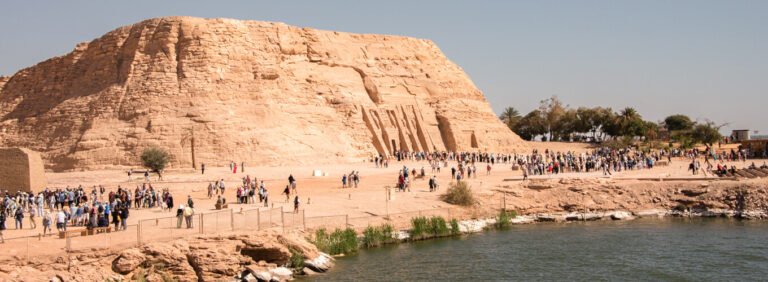
No visit to the region feels complete without Abu Simbel, and yes, it means a very early alarm. The site lies roughly 280 kilometres south of the city, around three hours by road each way, so most travellers set off in the pre-dawn hours to arrive in cooler, softer light and ahead of the tour buses.
Two rock-cut temples await. The Great Temple of Ramesses II is fronted by four enormous seated statues of the pharaoh, while the smaller Temple of Hathor honours his queen, Nefertari, with six standing figures. Both were famously dismantled and lifted to higher ground in the 1960s to rescue them from the rising waters of Lake Nasser behind the High Dam.
Planning your timing and entry
There is a formal ticket gate, prices posted in Egyptian pounds, and basic facilities on site. Phone signal along the desert road can be patchy, so carry water, snacks, sun protection, and enough cash for tickets and any extras before you leave the city.
Inside the temples
Beyond the facade, a sequence of halls reaches deep into the sandstone cliff. Look for the vivid wall reliefs, including scenes from the Battle of Kadesh, and the towering Osiride statues of the king lining the great hall.
The solar alignment
Twice a year, around 22 February and 22 October, the rising sun pierces the temple and illuminates the statues in the inner sanctuary, a phenomenon that draws crowds and marks the visit as something special. Outside photography is generally permitted; follow the posted rules and staff guidance once you step indoors.
Philae Temple: Isis on an Island
A short boat ride across a calm channel of the Nile delivers you to Agilkia Island, where the Philae Temple complex was carefully reassembled after being moved, like Abu Simbel, to escape Lake Nasser. The approach itself, gliding over glassy water toward the columns, sets a gentle tone for the visit.
Getting there
Access begins at the ticket office a few kilometres south of the city. Buy your entry at the gate, walk down to the jetty, and hop into one of the small motorboats. Agree the return time and fare with your boatman before you set off, and keep exact cash in Egyptian pounds to hand.
What to look for
The Temple of Isis spans the Ptolemaic and Roman eras. Admire the twin pylons, the elegant riverside Kiosk of Trajan, and the carved narratives of Isis, Osiris, and Horus. Remember that the whole island of monuments was relocated stone by stone, an extraordinary feat of preservation.
Best time to visit
Late afternoon brings low, warm light that flatters the stone and leaves soft reflections on the water. If you linger past dusk, a separate sound-and-light programme dramatises the architecture; check the day’s schedule and bring a light layer for the boat ride back.
Feluccas and Short Nile Cruises at Sunset
Few experiences capture Aswan better than a sail as the day cools. Felucca captains gather along the corniche and offer relaxed one- to two-hour trips that loop the central islands, letting you sit low to the water while the lateen sail fills with the evening breeze.
The classic felucca hour
The most popular option is a single hour timed for golden light. You will drift past palm-dotted islets, low dunes, Elephantine Island, and Kitchener’s Island as the city lights begin to flicker on. Carry small notes in Egyptian pounds and settle the route and price before you board.
Longer loops and multi-day options
With an extra day, ask about half-day sails that include a bankside stop or a swim. Shorter trips can also link into multi-day Nile cruise itineraries heading north toward Kom Ombo and Edfu, a temple-rich way to extend your journey.
Practical tip: pack sun protection for daytime sails and a light layer for cooler evenings. Your captain handles the rigging, so stay seated during turns and keep your gear stowed for a smooth, safe ride.
Elephantine Island: Nubian Colour and Riverside Calm
A brief crossing on a public boat lands you on Elephantine, where painted doorways, sunlit courtyards, and an unhurried pace replace the bustle of the mainland. Everyday life here feels both vivid and utterly ordinary.
Wandering Koti and Siou
Stroll the villages of Koti and Siou to admire brightly painted mud-brick houses and narrow lanes. You will pass residents going about their day, children at play, and the occasional goat or chicken in a shaded courtyard.
Slow moments by the water
Settle at a riverside cafe with a glass of tea and watch feluccas slide past while the light warms the painted walls. Along the eastern shore you can find the ancient Nilometer steps, once used to gauge the height of the annual flood.
Practical tips: local boats cross frequently, so keep small change for the fare and a cafe stop. Always ask before photographing people, and respect their privacy.
The Nubian Museum: A Region’s Story Under One Roof
Housing thousands of artefacts alongside a rich photographic archive, the Nubian Museum is the single best place to make sense of everything you see out on the river. Open roughly 9am to 5pm, its galleries lead you through prehistory, the Pharaonic age, the Coptic era, and the Islamic centuries along a clear timeline.
Standout pieces anchor the narrative, including a commanding statue of Ramesses II and a striking black granite head of the Kushite king Taharqa. Just as memorable are the black-and-white photographs documenting the UNESCO campaign that lifted temples like Abu Simbel and Philae to safety, giving real weight to the monuments you may already have visited.
Allow an hour or two for the main sweep, then browse the ethnographic displays of crafts and daily life. The building sits off El Sadat Road near the Fatimid Cemetery, so you can pair it with a short walk among the atmospheric mud-brick mausoleums nearby.
The Unfinished Obelisk: A Window into Ancient Engineering
In the northern granite quarries lies one of Egypt’s most honest monuments: a colossal obelisk abandoned mid-carving, still attached to the bedrock. Had it been completed, it would have stood around 41 to 42 metres tall and weighed more than a thousand tonnes, larger than any obelisk ever raised.
Around the stone you can trace the marks of the work itself: rows of bored holes, wedge slots, and chisel scars. Labourers split the granite using wooden wedges and water, a method you can follow along the cut walls. A structural crack most likely halted the project, leaving the piece frozen in time.
The site opens from early morning into the afternoon, with a small gate east of the Nubian Museum. Come early or late to dodge the midday heat, wear sturdy shoes for the uneven footing, and remember that shade is scarce. Paired with the museum, it makes the region’s stone-working heritage genuinely tangible.
Kom Ombo and Edfu: Two Temples Upriver
Head north along the Nile and you reach a pair of Ptolemaic temples that reward the detour with both scale and detail.
Kom Ombo’s twin sanctuaries
About an hour north, Kom Ombo is unusual for its symmetrical double layout, dedicated jointly to the crocodile god Sobek and the falcon god Horus. Look closely for reliefs depicting an early calendar and surgical instruments, then visit the small museum where crocodile mummies bring the cult of Sobek vividly to life.
Edfu’s remarkable completeness
Edfu ranks among Egypt’s best-preserved temples. Its towering pylons, broad courtyards, and crisp relief work make the Temple of Horus feel almost untouched by the centuries.
Practical tips: both sites feature on most Nile cruise itineraries, or you can reach them by road with an early start. Carry small notes for entry, leave time for photographs, and consider pairing them with an Abu Simbel run for a fuller southern loop.
High Tea at the Old Cataract Hotel
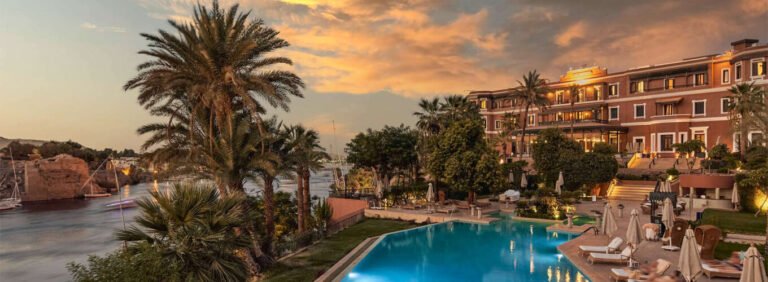
A visit to the Sofitel Legend Old Cataract feels like walking into a chapter of a novel. Afternoon tea on the terrace looks straight across to Elephantine Island and the dunes of the west bank, framed by the hotel’s lush gardens and grand, historic rooms.
Non-guests can usually access the terrace with a cover charge or minimum spend that is credited to your bill, though policies change, so check on arrival. Settle by the balustrade, order a pot of tea, and watch the feluccas tack across the river as the light shifts from gold to indigo. Late afternoon offers the best colours and cooler air. Dress smart-casual, and if you enjoy a literary footnote, this is where Agatha Christie is said to have written while staying in Aswan.
Qubbet el-Hawa Viewpoint: Dunes at Blue Hour
For a memorable sunset, cross to the west bank and walk toward the Qubbet el-Hawa hill, where the Nile plain unfolds beneath you like a painted map. Time the climb for the shift from sunset into blue hour, when the desert softens and the first city lights begin to sparkle.
Take a steady, zig-zagging path up the dune to spare your knees on the way down. If you are not planning to enter the Tombs of the Nobles, follow the outer path around their gate to avoid a separate fee. Bring a light layer and a head torch for the return, and confirm the last boat time before you set out, so you are not caught short after dark.
Monastery of St Simeon: Desert Silence
Among the west bank dunes stands the 7th-century Monastery of St Simeon, abandoned in the 13th century when water grew scarce. It leaves a poignant record of early Coptic monastic life. Reach it by crossing the river and either walking up the sandy path or taking a short camel ride of around half an hour.
Inside you will find an aisled basilica, vaulted monks’ cells with brick beds, and carved inscriptions, all enclosed by fortified walls that stand out sharply against the rippling sand. Go earlier in the day for cooler light and carry water, sun protection, and small change for entry and the return boat. From the ramparts, the sweeping desert view makes a fine, quiet pause.
Aswan Botanical Gardens: A Leafy Island Stroll
On Kitchener’s Island, just west of Elephantine, the botanical gardens offer a cool, green counterpoint to the surrounding desert, with mature palms and shade trees planted in tidy rows. A short boat ride from the corniche, by small motorboat or felucca, drops you at a simple jetty.
Paths loop the grounds, so an easy hour covers the full circuit. Late afternoon brings a pleasant breeze, good birdwatching, and warm light filtering through the canopy. Local families picnic here at weekends, so choose a weekday for more space. Bring water, sun protection, and small notes for the landing fee, and pair it with Elephantine or a sunset felucca for a relaxed, nature-forward afternoon.
The Aswan High Dam: Engineering that Reshaped the Nile
Begun in 1960 and completed in 1971, the High Dam is a monumental piece of modern history that transformed the river. The structure spans around 3.6 kilometres, with a base roughly 980 metres across, and its reservoir, Lake Nasser, holds something in the order of 135 billion cubic metres of water, stretching south like an inland sea.
The dam brought hydroelectric power and new farmland while ending the annual flood that had shaped life along the Nile for millennia. It also submerged numerous ancient sites, prompting the UNESCO-led rescue of temples such as Abu Simbel and Philae. A road runs along the crest, and commemorative monuments mark the achievement. Access by road is easy; bring ID, expect on-site security, and follow posted guidance. It pairs neatly with Philae or Kalabsha for a picture of cause and effect in a single outing.
Kalabsha and the Lake Nasser Temples
Along the shore of Lake Nasser, a cluster of rescued monuments stands as testament to one of history’s great salvage operations. Kalabsha, the largest, is a Roman-era temple rebuilt on higher ground; its colonnades and half-finished decoration tell a layered story of reuse and craft.
Nearby, Beit el-Wali preserves vivid battle reliefs commissioned by Ramesses II, while the tiny temple of Kertassi, with its elegant Hathor columns, feels intimate beside its larger neighbours. All were moved here as part of the UNESCO effort. Combine a taxi from the city with Philae and the High Dam for a compact trip that traces both ancient artistry and modern engineering. Local boats sometimes handle short hops between landings, so confirm your pick-up on arrival.
The Souq: Spices, Textiles, and Nubian Crafts
Step into Sharia el-Souk and the market’s easy rhythm welcomes you with spices, scarves, and silver. Stalls sit close together, each offering perfume vials, galabeyas, and handwoven baskets. Look out for karkade, the dried hibiscus sold by weight, an easy taste of Aswan to carry home, along with finely worked Nubian jewellery and embroidered textiles.
Vendors here are friendly and talkative, and the atmosphere feels noticeably calmer than Cairo’s larger bazaars, so you can browse and compare without pressure. Carry small notes, haggle lightly and good-naturedly, and visit in the early evening when the heat drops and locals fill the lanes. A woven basket or a lightweight scarf makes a practical, characterful souvenir; just pack anything fragile with care for the rest of your trip.
A Suggested Two-Day Aswan Itinerary
Two days can be both compact and satisfying with a little planning.
Day 1: set off pre-dawn for Abu Simbel so you arrive near opening, explore both temples without rushing, and return by early afternoon to sidestep the peak heat. In the evening, reset with a sunset felucca, roughly an hour looping the islands as the sails darken against the fading sky.
Day 2: start with Philae Temple by boat in the soft morning light, then spend the hottest part of the day indoors at the Nubian Museum, adding the Unfinished Obelisk if time allows. Round off the afternoon with a drink on the Old Cataract terrace and a crossing to the Qubbet el-Hawa viewpoint for blue-hour city views.
With extra hours, add a short Nile cruise segment or a road trip to Kom Ombo and Edfu, depending on your train or flight times. Keep the plan realistic: factor in travel time, ticket queues, and sun protection, carry cash in Egyptian pounds for boats and small buys, and always confirm the last-boat time before an evening crossing.
Final Thoughts
Aswan rewards travellers who let it set the pace. Anchor your visit around the great temples of Abu Simbel and Philae, then fold in Elephantine Island, the Nubian Museum, and the obelisk quarry for texture and context. Short boat rides, calm water, and walkable lanes make it easy to weave together ancient monuments and living village life.
Finish with a slow terrace tea at the Old Cataract as the river turns to indigo, and you will understand why so many travellers rate this southern city among the highlights of Egypt. Still curious? Add a Nile cruise or a road hop north, and let sunset, stonework, and river breezes lead the way.