The main ways to get around Egypt are domestic flights for long distances (Cairo to Luxor, Aswan or the Red Sea), trains along the Nile Valley, a Nile cruise between Luxor and Aswan, and private drivers or taxis within cities. Ride apps like Uber and Careem are widely used in Cairo.
In Egypt, the journey between the great sites is rarely just a transfer — it is part of the story. Trains trace the length of the Nile Valley, connecting Cairo with Luxor, Aswan, and Alexandria; boats drift past palm-fringed banks and temple towns; buses reach the coasts and the desert oases where the rails run out. Getting around confidently means understanding how these pieces fit together, and this guide lays out the whole system in plain terms, along with the practical tips that keep transfers relaxed rather than stressful.
Your Game Plan: Match the Mode to the Distance
The smartest approach is to plan each leg according to its distance and your priorities. Map your route first, and a pattern usually emerges: short and medium hops along the Nile suit the railway, while far-flung desert or coastal destinations may call for a bus or a quick flight.
Choosing by distance
Trains are the efficient spine linking Cairo, Luxor, Aswan, and Alexandria — take the faster classes when your schedule is tight and the cheaper coaches when the budget rules. Buses reach the towns that sit off the rail grid, with deluxe services offering more legroom, while microbuses leave only when full and therefore need a buffer of patience built into your plan.
Balancing time, budget, and the view
For each leg, decide what you value most: saved time, saved money, or a scenic ride. Daylight trains and river segments hand you the views, whereas flights compress a long haul into under an hour. Within cities, blend the metro, ride-sharing, and short taxis for door-to-door access, then switch to intercity modes for the longer runs. Keep your plans loose and build in buffers for unscheduled microbuses or station queues, and the travelling stays enjoyable.
Trains Along the Nile Valley
Rail travel runs the full length of the Nile Valley and links the major centres directly, with steady scenery, reasonably predictable timetables, and clear class options for the long legs.
Key routes and journey times
The main spine connects Cairo with Luxor and Aswan to the south, and Cairo with Alexandria to the north. Heading south from Cairo, the morning departure is generally the most scenic, and the full run down to Aswan takes in the region of 14.5 hours. Northbound, the light is best early out of Aswan, and services from Luxor take roughly 9.5 to 10.5 hours for the journey to Cairo.
Carriages and classes
You will typically encounter two service types, often marketed as a premium “Special Service” and a standard air-conditioned option. The premium service uses newer rolling stock and costs a little more; both offer first- and second-class air-conditioned carriages with broadly similar amenities. Weigh seat comfort and fare against the timing and how much you need to sleep before choosing your class.
Sleeper trains for overnight legs
Sleeper trains run nightly between Cairo and Luxor or Aswan. They earn their fare twice over by saving you a hotel night and turning a long, dull journey into a rest period.
Buying tickets
The most reliable way to buy is at the station itself. The national rail website lists selected schedules but can be glitchy and rarely sells online to foreign nationals, so arrive early to secure your preferred service. Bear in mind the network has historically carried a higher accident rate, though modernisation is underway; plan small buffers around tight connections and pick the option that best matches your priorities.
On the Water: Cruisers, Dahabiyyas, Feluccas, and the River Bus
The Nile offers a whole spectrum of waterborne travel, from plush multi-deck cruisers down to tiny traditional sails.
Large cruise ships commonly sail the Luxor–Aswan corridor over about three nights, calling at Edfu and Kom Ombo, packing in meals and guided visits, and spending long stretches in port. It is a convenient, turn-key way to cover the stretch between the two cities, though the sites themselves can be busy when several ships arrive together.
Dahabiyyas for a gentler pace
Dahabiyyas — elegant, smaller sailing boats — drift more gently between Esna and Aswan, often calling at small villages and lesser-visited sites that the big boats skip entirely. If you prize actual sailing time and fewer crowds, this is a strong choice.
Feluccas under the stars
Choose a felucca when you want simplicity above all. Typical trips set off from Aswan and last one to three nights, reaching Kom Ombo, Edfu, or Esna depending on the wind. You share meals, sleep on deck, and accept that your progress is dictated by the breeze — which is precisely the appeal.
The river bus in Cairo
In the capital, the river bus offers a slower alternative that glides along the waterfront and skips the road traffic altogether. It is not fast, but it is a genuinely pleasant way to see the Nile without the fuss of the streets.
A few tips: pack a layer for cool evenings on the water, confirm exactly what is included before you book, and mix one relaxed river segment with quicker legs elsewhere so your overall pace stays comfortable.
Buses and Microbuses: Reaching the Coasts and the Desert
Long-distance buses link the coastal towns and remote oases where the trains and flights do not reach.
Intercity coaches
Intercity buses run several departures a day on the major corridors and are the straightforward way to connect coastal and desert destinations once the railway stops. Look for the deluxe services if legroom matters — the small fare bump usually pays off on a long haul like Cairo to the Red Sea. Standard-coach seats can feel tight, so taller travellers should aim for the front rows or plan regular stretch stops. Keep small bills handy for luggage fees and snacks, and confirm the departure platform when you arrive.
Microbuses for short hops
Microbuses — 14-seaters — handle the short, frequent links between towns and neighbourhoods. They leave only when full, so there is no fixed timetable, and many drivers keep a brisk pace on the open road. They are handy when your schedule is flexible; if you need certainty, opt for a full-size bus or arrange a private car for the remote legs. For the Western Desert oases in particular, note that services are limited — book a day ahead and build in buffer time in case a departure sells out. Where public transport ends short of your lodging, agree the taxi rate in advance and stitch a bus segment together with a short taxi for the final miles.
Getting Around Cities and Covering Ground Fast
Blend fast intercity links with simple urban moves and you keep the itinerary flowing without wasting hours.
The Cairo Metro
The Cairo Metro is a cheap, reliable way to cross the central corridors and reach the major districts quickly. Use it for the long cross-town hops, then grab a short taxi for the last-mile convenience.
Taxis, private drivers, and ride-sharing
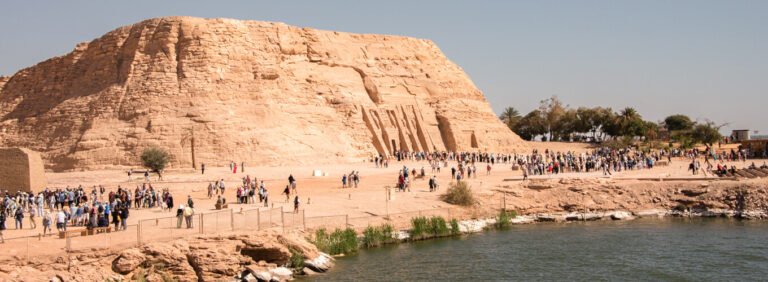
In the cities, ride-hailing apps such as Uber and Careem let you lock in the fare and pin your pickup spot, which removes the guesswork. Regular taxis and private drivers remain common for day trips — the run out to Abu Simbel, for instance, or the mountain routes in South Sinai. Whatever you take, always agree the price before you set off.
Domestic flights
When time is genuinely tight, a domestic flight between Cairo and Luxor, or between the capital and the Red Sea gateways, trades hours on the road for extra sightseeing time.
A note on accessibility
Accessibility across the transport network is improving, but slowly. For now, hiring a private driver is often the most practical workaround for travellers with mobility needs.
Final Thoughts
Wrap up your route planning with one simple rule: match the pace to the purpose, and let the journey add to the story rather than merely closing the gap between sites. Pick at least one daylight rail leg and one water ride so that the travel itself becomes part of the experience. Use the Nile Valley trains for the long, scenic stretches, add a short river segment — a big cruiser or a small felucca — for contrast, lean on the buses for anywhere beyond the rail spine, and save a quick flight for the moments when hours matter most. Verify the times, ticketing, seat type, and fare before you buy, mix a fast option with a slow one, and keep small buffers in the plan. Lock in your core legs, leave room for surprises, and treat every movement between destinations as part of the tour.