Luxor’s must-see temples are Karnak, the vast complex dedicated to Amun with its Great Hypostyle Hall, and Luxor Temple in the city centre, linked by the restored Avenue of Sphinxes. Both are on the East Bank and are especially atmospheric in the late afternoon and at night when floodlit.
Luxor is that rare place that feels like a living museum and an open-air necropolis at once. Arrive on the Nile and the geography does half your planning for you: the East Bank is the modern town of hotels, cafes and the great temples of the living, while the West Bank holds the tombs and mortuary temples of the dead. Understanding that simple split, city on one side, cemeteries and memorials on the other, is the key to a calm, rewarding visit.
This guide walks you through the must-see sites, Karnak, Luxor Temple, the Avenue of the Sphinxes and the Valley of the Kings, and tells you when to visit each, how long to allow, and what to skip if time is short. Whether you have one intense day or two relaxed ones, you will finish knowing exactly what to prioritise.
A Quick-Start Plan for Luxor
The winning strategy is to chase the light and beat the heat. Start early on the East Bank, ideally at Karnak soon after it opens, before the tour coaches arrive and the sun climbs.
What to See First
A smooth East Bank morning might run from Karnak Temple (including its Open Air Museum) to Luxor Museum and the Mummification Museum, saving Luxor Temple itself for the golden light of late afternoon. Karnak is at its best before mid-morning; Luxor Temple truly comes alive at sunset and after dark.
How Many Days You Need
With a single day, spend the morning on the East Bank and cross the river for a focused West Bank visit in the afternoon, hitting the headline sites without exhausting yourself. With two days, give one to the East Bank, adding the Avenue of the Sphinxes and both museums, and the other to the West Bank’s Valley of the Kings and a mortuary temple. Either way, leave a few buffer minutes between sites for shade, photos and a breather. Walk the short hops on the East Bank and use a licensed taxi for the longer ones.
East Bank vs West Bank: How the Nile Shapes Your Day
A single crossing of the Nile takes you from busy streets to silent tombs, and that divide is the backbone of any Luxor itinerary.
East Bank Essentials
The East Bank is the modern city: hotels, cafes and short walks between the major sites. Anchor your morning at Karnak, use the nearby museums for context, and save the Luxor Temple area for a relaxed late-afternoon stroll. Shade and services are easy to find here, so you can keep an unhurried pace.
West Bank Focus
The West Bank holds the Valley of the Kings, the mortuary temples and wide desert views. Sites sit farther apart and the heat can be fierce, so choose a handful of tombs and one headline mortuary temple rather than trying to see everything, then linger near the Colossi of Memnon for golden-hour light. Morning sun flatters the columns; late afternoon flatters the cliffs and statues.
Karnak Temple: The Vast Precinct of Amun
Step into Karnak and you enter one of the largest religious complexes ever built, raised over roughly two thousand years with something like thirty pharaohs adding to its sprawl. The scale is genuinely hard to grasp until you are standing among the columns.
The Unmissable Highlights
Enter past the avenue of ram-headed sphinxes and pause at the first pylon to take in the forecourt and its statue of Ramesses II. The showpiece is the Great Hypostyle Hall, a forest of 134 towering papyrus columns begun under Amenhotep III, finished by Seti I and decorated by Ramesses II. Loop back later to the Sacred Lake for a calm moment and scan the grounds for fallen obelisks and monumental fragments.
The Open Air Museum
Do not skip the Open Air Museum, where reconstructed monuments such as the White Chapel and the Red Chapel stand alongside the calcite shrine of Amenhotep II and rows of lion-headed Sekhmet statues. As you move between them you are effectively tracing the changing styles of two millennia in one compact space.
Timing and Crowd-Beating Tips
Karnak generally opens in the early morning and closes in the late afternoon. Allow ninety minutes to two hours and arrive before mid-morning to stay ahead of the tour wave. Bring water and sun protection, follow a deliberate route, main axis, then Hypostyle Hall, then the lake and museum, and time your Luxor Temple visit to connect along the Avenue of the Sphinxes.
Luxor Temple: Elegance by Day and by Night
Luxor Temple sits right in the heart of town, and it is one of the few major sites that rewards an evening visit. As the sun drops, warm light rakes across the reliefs and the courts take on a softer, more intimate mood.
The Approach
Two colossal seated figures of Ramesses II flank the first pylon, and a single pink-granite obelisk still rises beside the gate; its twin has stood in Paris for nearly two centuries. Beyond lies the graceful Colonnade of Amenhotep III with its fourteen open papyrus columns, followed by the Sun Court and the inner hypostyle hall, where you can sense the processional route once used to carry the images of the Theban gods.
Layers of History
Luxor Temple wears its later centuries openly. The Abu al-Haggag Mosque perches on top of the ancient walls, still in use today, while Roman frescoes and an arch mark a period when part of the temple served as a military camp. Look, too, for the birth room of Amenhotep III and the Amun sanctuary, where a cartouche of Alexander the Great appears on the walls.
Why Evening Wins
Aim for sunset and stay into the early night if you can. Daylight gives depth to the carvings, and the artificial lighting after dusk adds drama and opens up fresh angles for photographs. Budget about an hour, or more if you like to study the detail.
The Avenue of the Sphinxes
Running for roughly 2.7 kilometres, this ancient processional way links Karnak and Luxor Temple in a straight ribbon of carved guardians. It reopened to the public in 2021 after a long restoration, and today an estimated 1,350 sphinxes line the route.
Access and Tickets
You can join the avenue at either end, at Karnak or at Luxor Temple, or at a mid-route access point. Walking the full length works best if you hold valid entry for both temples or carry a Luxor Pass, since entry is checked along the way.
Best Stretch and Timing
The section nearest Luxor Temple is the most complete and photogenic, framing the temple facade with dense sculpture. There is very little shade, so plan for early morning or late afternoon, and allow around thirty to forty-five minutes for a substantial segment, more if you stop often. Watch your footing on the restored areas and respect the roped-off sections.
The East Bank Museums
A short museum visit turns the carvings and statues you see outdoors into readable stories, and both East Bank museums double as cool, shaded breaks in the middle of the day.
Luxor Museum
Opened in 1975, the Luxor Museum focuses on local finds and includes pieces connected to Tutankhamun. Allow about an hour for a calm walk through beautifully displayed statues, reliefs and everyday objects that echo what you have seen at Karnak and Luxor Temple. It typically opens for a morning session and again in the early evening, with modest admission and reduced rates for students; check the posted hours and fees when you arrive, as they change from time to time.
Mummification Museum
This compact museum explains the ritual of mummification step by step and displays both human and animal mummies. Half an hour is usually enough for the clearly labelled exhibits. Like the Luxor Museum, it often runs split morning and evening hours, so confirm the current schedule the week you visit.
West Bank Must-Sees
The West Bank is quieter and more elemental, cliffs, tombs and open fields under a big sky. Plan it around a few strong choices rather than an exhausting sweep.
Choosing Your Tombs
The Valley of the Kings holds royal burials spanning roughly five hundred years, but only a rotating selection is open at any time and your standard ticket usually covers a set number of tombs. Pair a compact, iconic tomb such as Tutankhamun’s with a larger Ramesside tomb for its rich colour and scale. Arrive early to beat both the queues and the heat, and read each tomb’s wall scenes from the entrance inward to follow the pharaoh’s journey to the afterlife.
Hatshepsut, the Colossi and Golden Hour
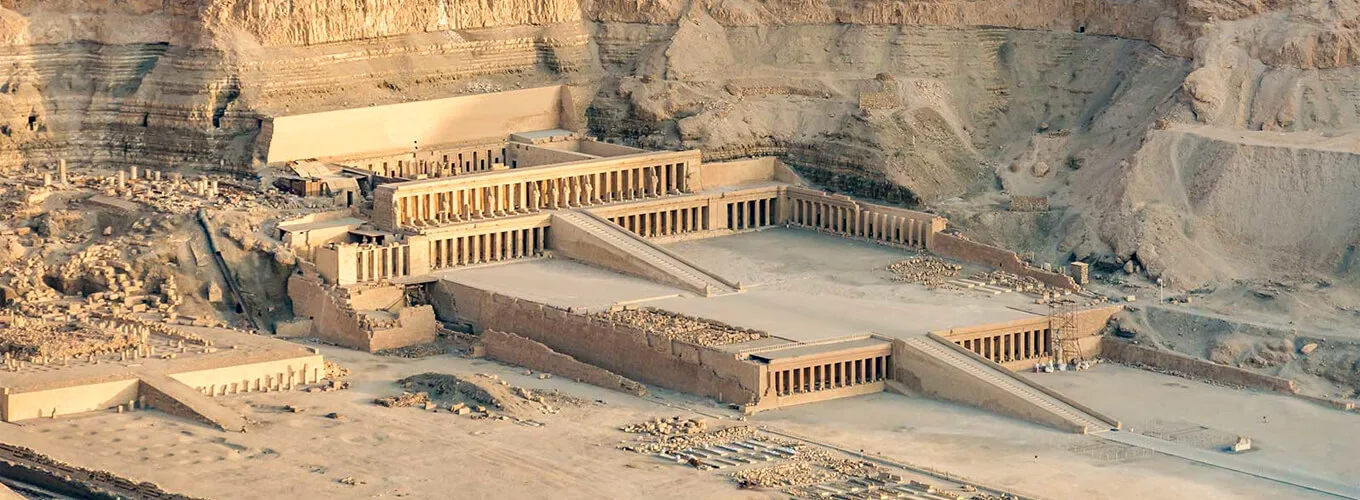
Add the mortuary temple of Hatshepsut, its three dramatic terraces cut into the cliff face, then finish at the Colossi of Memnon around golden hour, when soft light falls on the two giant seated statues and the surrounding fields. Carry water, sunscreen and a hat, and keep the window tight if you only have one day.
Tickets, Passes and Saving Time
The right pass can shorten queues and free up hours for photos and quiet corners. Match the pass to how many sites and days you are planning.
Standard vs Premium Luxor Pass
The Standard Luxor Pass covers most East and West Bank sites but excludes the tombs of Seti I and Nefertari; it is valid for five days. The Premium Luxor Pass adds those two headline tombs and also lasts five days. If Seti I and Nefertari are on your wish list, the premium option can pay for itself quickly. Prices are set in foreign currency and change periodically, so confirm the current rate before you buy.
The Cairo Pass Combo
The Cairo Pass covers major sites in Cairo, Giza, Dahshur and Saqqara for five days, and buying it first can unlock a significant discount on a Luxor Pass within its validity window. If your trip takes in both cities, the combination often works out cheaper than paying at each gate.
Where to Buy and What to Bring
Passes are sold at Karnak Temple and at the Valley of the Kings ticket office. Bring your passport plus a photocopy of the main page, a passport photo, and a valid student ID for reduced rates. Payment is usually expected in crisp US dollars or euros, so carry clean notes, activate your pass early in the day to make full use of it, and keep it handy, checkpoints ask to see it often.
Timing Each Site Around the Light
Planning your day in blocks, dawn, late afternoon and night, lets each site show its best face.
Sunrise and Morning
Reach Karnak at or just after opening. Soft morning light filters through the Hypostyle Hall, the crowds are thin and the temperature is bearable, easily the highest-payoff hour of the day.
Late Afternoon and Sunset
Save Luxor Temple for late afternoon into sunset, when golden light warms the sandstone. On the West Bank, aim for the Colossi of Memnon at sunset for the best view across the statues and cliffs.
Midday and Night
Duck into the Luxor or Mummification Museum during the fierce midday heat, then head back outdoors as it cools. If you enjoy a bit of theatre, reserve one evening for the Sound and Light Show at Karnak, staged after dark on select nights. Always recheck posted hours the day before, and carry water in summer or a warm layer for winter evenings.
Sample Itineraries
The One-Day Blitz
Start at Karnak first thing, beginning in the Hypostyle Hall for cooler light and fewer people, then walk the Open Air Museum. Move to Luxor Temple for a mid-morning look, and use the Mummification Museum and Luxor Museum as your midday, out-of-the-heat break. As the sun drops, stroll the Avenue of the Sphinxes near the temple or cross the river for a West Bank viewpoint. Keep the taxi hops short and walk where shade and interest line up.
The Two-Day Plan
On day one (East Bank), visit Karnak early, walk a section of the avenue, and return to Luxor Temple for the late-afternoon and evening light. On day two (West Bank), choose a curated list of tombs in the Valley of the Kings including Tutankhamun, add Hatshepsut’s temple, and finish at the Colossi of Memnon near sunset. Pack water and snacks, build in short photo buffers, and use your East Bank hotel as a quick midday reset before heading out again for the best evening atmosphere.
Getting to Luxor and Around
Plane, Train or Cruise
Flying into Luxor International Airport is the fastest option; it sits a short drive east of the centre and licensed taxis wait at arrivals. Overnight sleeper and express trains link Cairo with Luxor, while trains between Luxor and Aswan take a few hours. Arriving by Nile cruise turns the journey itself into sightseeing.
Taxis and Hired Drivers
For longer hops, especially out to the West Bank and the Valley of the Kings, hire a licensed taxi or arrange a private driver through your hotel; a car and driver for the day simplifies parking and pickups. The Careem app works locally for short rides, but Uber and Lyft do not operate in Luxor.
Walking the East Bank
Luxor Temple, part of the Avenue of the Sphinxes and the museums all sit within comfortable walking distance on the East Bank. Walk in the shade where you can, rest during the midday heat, keep small bills for fares and tips, and build a time buffer if you have a train or flight to catch that evening.
Where to Stay and Eat
Choosing a Base
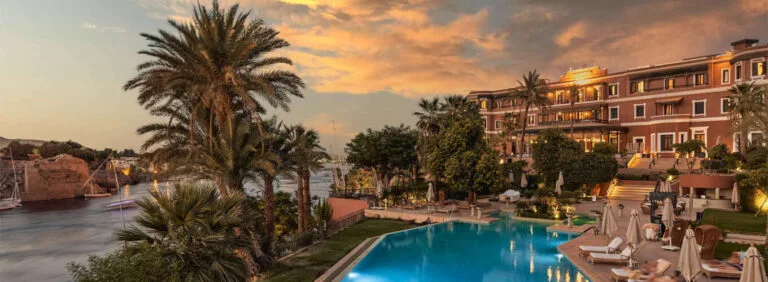
An East Bank hotel gives you walkable access to museums, restaurants and evening lights without long rides after dark. For classic grandeur, the historic Sofitel Winter Palace sits near Luxor Temple with storied riverside charm, while other riverside properties offer pools, terraces and sweeping Nile views for relaxed downtime. If you want water views, ask specifically for a Nile-facing room; a garden- or city-facing room is usually kinder on both budget and sleep.
Eating Near the Temples
Most dining clusters on the East Bank, close to the hotels and museums. Look out for home-style Egyptian mezze and slow-cooked dishes, and rooftop spots that frame Luxor Temple at golden hour. Many hotels lay on generous breakfast buffets to fuel a day of walking, and licensed venues serve alcohol where local rules allow. Popular rooftops fill quickly, so arrive just before sunset or book ahead, and ask about vegetarian options such as lentil soup and falafel.
Extending Your Trip: Nile Cruise Temple Stops
Sailing between Luxor and Aswan folds several extra temples into the journey. Kom Ombo stands out for its unusual twin dedication and its crocodile lore; Edfu offers towering pylons and crisp relief carving that photographers love; and Esna often slots neatly into the sailing timetable for a quick mid-route stop. If you are not cruising, you can reach the same sites by train or private car. Either way, plan to be ashore during the soft light of early morning and late afternoon, and back on board when the heat peaks.
Practical Tips: Money, Culture and Rules
Cash, Tipping and Dress
Carry Egyptian pounds for tickets, small purchases and tips, as many cafes and vendors prefer cash. Small bills are handy, since tipping is customary for those who help with bags or directions. Dress for both sun and respect: lightweight clothes that cover shoulders and knees keep you cool and welcome at religious sites, and a hat, sunscreen and a light scarf are worth packing.
Photography, Drones and Alcohol
Ask attendants about the rules before shooting, as some interiors ban flash or tripods to protect fragile paint. Drones need explicit official permission, so do not fly without the correct paperwork. Alcohol is legal only in licensed restaurants and hotel bars. A little courtesy toward staff goes a long way and often earns you a helpful local tip in return.
Reading the Stones with Fresh Eyes
The reliefs at Luxor’s temples are not decoration; they are a record of rule, ritual and belief that you can learn to read. Start with the statues: you can spot Ramesses II by his crowns and cartouches at the pylons, then compare their scale with figures linked to Amenhotep III deeper inside, a contrast that tells you which pharaoh was reaching for grandeur and why.
Treat the chapels like chapters. Birth rooms, barque shrines and sanctuaries each explain a facet of kingship and the relationship between people and gods, and recut cartouches, such as those added by Alexander the Great, reveal later powers laying claim to older glory. In the Valley of the Kings, follow the wall narratives from doorway to burial chamber so the images read as a story rather than a jumble. Use low-angle light to bring out the depth of the carving, and keep a short mental list, one statue, one chapel, one relief per site, so the detail deepens your visit instead of overwhelming it.
Final Thoughts
Let the Nile shape your Luxor: the East Bank for city life, museums and the great temples of Karnak and Luxor, the West Bank for tombs, mortuary temples and unforgettable sunsets over the Valley of the Kings. With one day, pick a tight route and move smart; with two, savour each bank and return after dark for a completely different atmosphere. Keep your tickets simple, respect local customs, and end each evening somewhere calm where you can turn the day’s images over in your mind. Above all, leave a little room for quiet discoveries, they often become the memory you keep longest.