The best museums in Cairo are the Grand Egyptian Museum near the Giza pyramids, home to the full Tutankhamun collection, the historic Egyptian Museum on Tahrir Square, and the National Museum of Egyptian Civilization, which displays the royal mummies. Together they hold the world’s greatest collection of ancient Egyptian artefacts.
Few cities let you walk through five thousand years of human achievement in a single afternoon, yet that is exactly what Cairo offers. Its museums hold the densest concentration of pharaonic treasure anywhere on earth, and knowing how to move between them turns a chaotic day into an unforgettable one. This guide walks you through the collections worth your time, how to reach them, and how to plan a museum day that leaves you inspired rather than exhausted.
Why are Cairo’s museums worth visiting?
Egypt’s greatest artefacts are not scattered across a continent; they sit within a short taxi or metro ride of one another in the capital. That concentration is a gift for travellers. In one morning you can trace the rise of the Old, Middle, and New Kingdoms, study the objects that lined royal tombs, and stand before faces carved more than three millennia ago.
There is also a practical reason to start indoors. Seeing polished statuary, funerary equipment, and painted coffins up close teaches you to read the same motifs when you later reach the temples of Luxor or the plateau at Giza. A museum-first approach gives every later site a richer meaning, so the pyramids feel like the climax of a story rather than an isolated spectacle.
Recent conservation work has helped too. Upgraded lighting, protective glass, and clearer signage make the central galleries far easier to navigate than they were a decade ago, and the arrival of major new institutions means the treasures are now spread across a handful of complementary sites.

The Egyptian Museum at Tahrir Square
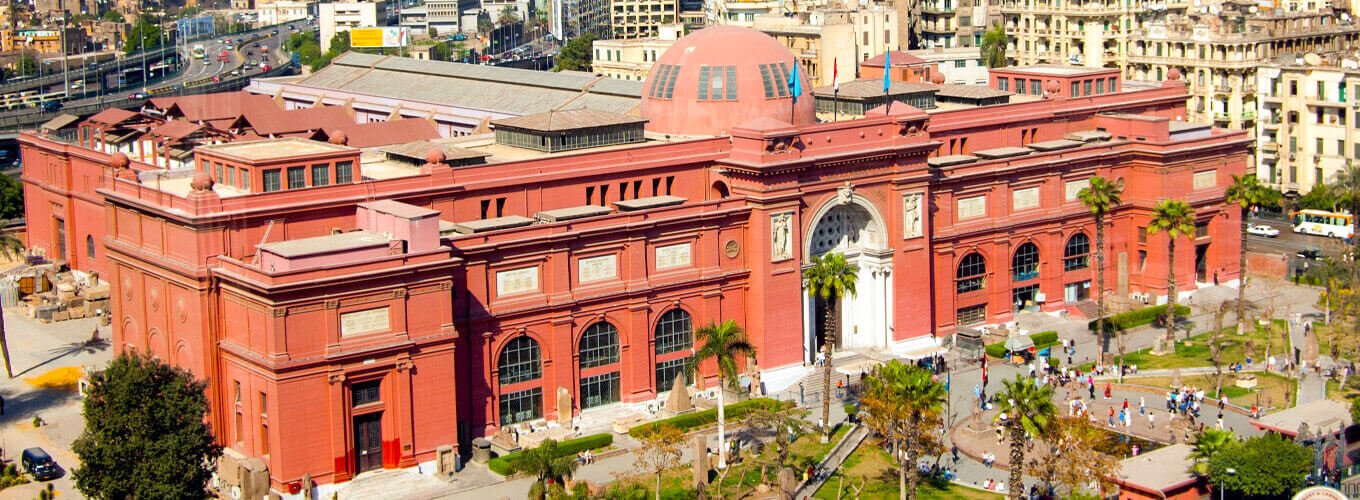
The grand old museum on the north side of Tahrir Square is where most visitors begin, and rightly so. Opened in 1902 to a design by the French architect Marcel Dourgnon, it holds well over 120,000 objects that map royal and everyday life across the dynasties. Even a brisk visit leaves you with a clear sense of how Egyptian art evolved over the centuries.
What to prioritise inside
The ground floor is dominated by monumental stone: colossal pharaohs, statues, and reliefs arranged so you can watch royal poses shift from one era to the next. Upstairs, the tone changes entirely, with papyri, textiles, coins, and beautifully preserved wooden sarcophagi that reveal how ordinary people worked, dressed, and worshipped. The Tutankhamun galleries remain a highlight, though be aware that portions of that collection are being moved as the newer Grand Egyptian Museum comes fully online.
Getting there and opening hours
The building is a short walk from Sadat metro station, which is by far the quickest way to reach the square during busy hours. If you drive, the nearby multi-storey car park is convenient. Galleries generally open daily from 9:00 to 19:00, with a split schedule on Fridays (roughly 9:00 to 11:00 and again from 13:30) to accommodate midday prayers. Personal photography usually requires a small permit fee of around 50 EGP, and a few sensitive halls, including the room displaying the famous golden funerary mask, do not permit photos at all.
National Museum of Egyptian Civilization (NMEC)
In the historic district of Fustat sits a museum that changed the map of Cairo’s collections. When the Royal Mummies were transferred here during the televised Pharaohs’ Golden Parade in April 2021, the NMEC became the essential companion to any museum day.
The Royal Mummies Hall
The centrepiece is a dimly lit, climate-controlled hall where 18 kings and 4 queens rest in individual cases. Stable temperature and humidity protect these remains for future study, and the hushed, reverent atmosphere encourages you to slow down and really look. Coming face to face with rulers you have only read about is a quietly moving experience, quite unlike anything in the grander stone galleries elsewhere.
Beyond the mummies
The wider museum traces Egyptian civilisation thematically, from prehistory through the Islamic and modern eras, with galleries devoted to daily life, craft, technology, and belief. If your time is short, focus on the mummies and one or two themed rooms that match your interests rather than trying to see everything.
A note on photography
Photography is not permitted inside the Royal Mummies Hall, so plan simply to be present. Afterwards, take a short walk around historic Fustat to connect the displays to the living fabric of the old city.
The Grand Egyptian Museum (GEM)
On the edge of the Giza plateau, within sight of the pyramids themselves, stands the vast new Grand Egyptian Museum. Its purpose is ambitious: to display the complete Tutankhamun collection together for the first time, arranged to follow the boy king’s story from the royal court to the sealed tomb.
What the galleries offer
Expect generous, well-lit spaces, conservation-conscious display cases, and interactive tools designed to make ancient objects feel immediate. The layout favours easy circulation and inclusive access, with family-friendly features throughout. Because it relieves pressure on the older Tahrir galleries, GEM also allows the historic Egyptian Museum to refine its own themes.
How the three sites fit together
Think of Cairo’s museum scene as a trio that works best in combination: the Egyptian Museum for sheer breadth of masterpieces, the NMEC for rulers and the science of preservation, and GEM for modern, immersive storytelling around Tutankhamun. As collections continue to shift between them, a return visit rewards you with new displays each time.
The museums inside the Cairo Citadel
High on its ridge above the city, the Citadel of Saladin offers a completely different perspective on Egyptian history, focused on the modern nation rather than the ancient one.
The Egyptian Military Museum
This collection follows army campaigns, changing uniforms, and the milestones of modern national life through models, medals, and weapons, all clearly labelled. The galleries are smaller than the great archaeology museums, but they provide valuable context on nineteenth and twentieth-century history.
The Police Museum
Nearby, the Police Museum looks at the institutions that shaped everyday civic order, with exhibits on notable cases and the evolution of law and administration. Together these two venues reveal how the modern state took shape. While you are on the ridge, do not miss the Mosque of Muhammad Ali and the sweeping views across the rooftops of Cairo.
Themes and artefacts to seek out
Letting a theme guide your visit is the surest way to avoid museum fatigue. Rather than drifting past case after case, follow a thread and let each object add to a larger picture.
Kings and queens
For royal power, concentrate on the ground-floor statuary and the royal coffins, where you can watch artistic style shift across the centuries. Funerary art rewards slow looking.
Daily life and belief
For a more human story, head to the upper galleries and the smaller display cases. Amulets, cosmetic palettes, tools, and textiles connect you directly to craft and faith, while canopic jars and ushabti figures reveal the practical machinery of the afterlife.
When time is tight
If you only have an hour or two, use the gallery maps to move purposefully from rulers to workers to religious practice. Study the surviving polish and pigment on the stone, and save your permitted photographs for the pieces you most want to remember.
Planning a smooth museum day
Routes and metro tips
Begin at the Egyptian Museum on Tahrir to maximise your time among the largest collection, using Sadat metro to skip the traffic. Group galleries on the same floor so you are not constantly climbing stairs, and pause to eat and hydrate between sessions to keep your energy up for the dense displays.
Timing your visit
Always check opening hours before you set out, remembering the Friday split schedule. Arriving at opening time means quieter, cooler galleries before the midday crowds arrive. Where evening openings are offered, a split day of a morning session, a proper break, then a calmer night visit under the improved lighting can be a lovely way to experience the collections twice.
Photography, audio guides, and services
At the Egyptian Museum, a modest photo permit (around 50 EGP) covers personal photography in most galleries, though sensitive halls such as the golden mask room are off limits, and the NMEC mummies hall bans cameras entirely. Occasional free-photo days are announced at Tahrir, so keep your ticket and any permit handy for checks at gallery doors.
An audio guide, historically rented for a small fee of around 25 EGP, is an inexpensive way to grasp context quickly, and a short guided introduction is even better for pointing out the highlights and explaining how the rooms flow. Allow a little time to collect and return any shared equipment.
For design lovers: architecture and display
The Tahrir building is a monument in its own right. Marcel Dourgnon’s historic facade and generous interior proportions frame the whole experience and reflect the civic confidence of early twentieth-century design. More recent conservation has restored original wall tones, added UV-protective glazing, and improved both ventilation and lighting so that relief details and sarcophagus surfaces reveal themselves as never before.
Look out for the following as you move through the galleries:
- Restored plaster tones and grand proportions that speak of early twentieth-century civic ambition.
- Protective glass and ventilation systems that balance conservation with visitor comfort.
- Modern lighting that draws out carving and surface detail you might otherwise miss.
- Reorganised displays that tell clearer stories as star pieces migrate to GEM and the NMEC.

From galleries to the pyramids: a chronological route
The most rewarding way to experience ancient Egypt is to build knowledge indoors first, then step outside to test it. Start with the artefacts and their labelled timelines, which explain the techniques, materials, and funerary ideas behind the monuments.
From there, visit Saqqara to see Djoser’s Step Pyramid, the early stone experiment that connects directly to objects you have just studied. Then move to the Giza plateau, where the Great Pyramid and the Sphinx give real scale to everything you have learned. Recognising the same motifs on the living stone completes the loop and makes each monument feel like the next chapter of a story rather than a separate attraction.
Families, accessibility, and comfort
A calm, well-paced visit keeps everyone engaged. At the Egyptian Museum the two floors conveniently separate the large stone works below from the smaller objects above, which makes it easy to plan short segments with natural breaks. Aim for blocks of 20 to 40 minutes, use lifts or ramps where they exist, and seek out galleries with benches so you can rest and talk.
Alternating between towering sculptures and small discovery cases holds children’s attention and gives adults deeper context. Bring water, small permitted snacks, and light layers for moving between outdoor heat and indoor air conditioning. For sensory-friendly visits, choose quieter hours, dimmer rooms, and clear exit routes.
When to go and how long to stay
Timing shapes your day more than you might expect. Arriving at opening lets you enjoy the details without jostling, and it keeps you ahead of the heat. Allow at least half a day for the main museum, adding a second block if you want to linger in specialty rooms, and always plan around the Friday split schedule so you are not caught at the doors during the midday closure. If evening access is offered during your stay, use it to revisit your favourite pieces in peace.
Budgeting and tickets
A little planning keeps costs predictable. Entry rates differ for Egyptians and Arab visitors, foreign visitors, and students, and children under six generally enter free. Beyond the ticket, budget for the photo permit if you want it, plus optional extras such as an audio guide or locker. If your budget is tight, skip the non-essential add-ons and make use of any free-photo days. For a short highlights visit, a quick look without a photo permit can be the sensible choice; for a full morning among the treasures, the small fee is easily worth it.
Etiquette and a smooth, respectful visit
Respecting posted rules protects fragile collections and keeps your own day calm. Some rooms ban photography and the NMEC mummies hall prohibits it entirely, so follow staff directions. Be mindful of local customs and tipping norms, and remember that a polite but firm refusal works well if someone offers a service you do not want. Use official entrances to speed security, keep valuables secure, and carry copies of your tickets or ID. Lower your voice in the solemn halls, step aside so others can view the displays, and a friendly smile or a few words of Arabic will always go a long way.
A quick readiness checklist
- Build a flexible schedule: plan two or three gallery days so you can balance rest with meaningful time among the exhibits.
- Note the entrance times: the Tahrir museum sits by Sadat metro with hours generally 9:00 to 19:00 and a Friday split, so check for seasonal changes before you go.
- Learn your transit: Sadat station serves Tahrir, the NMEC is at Fustat, and the Citadel gathers several sites into a single visit.
- Carry the essentials: a light day bag with water, ID, and any photo permit, leaving bulky luggage at your hotel.
- Stay updated: bookmark the official pages for last-minute changes to hours, special exhibitions, or photo rules.
Conclusion
Cairo’s museums reward travellers who arrive with a plan. Begin at the Egyptian Museum on Tahrir for its sweeping breadth, deepen the story at the NMEC’s Royal Mummies Hall, and watch the Grand Egyptian Museum take shape as the new home of Tutankhamun’s full collection. Respect the photography rules, time your entries around the crowds and the heat, and pace your days so that each object adds to the whole. Do that, and you will leave not only with a clear timeline of ancient Egypt in your head, but with a real reason to return as these remarkable galleries continue to evolve.