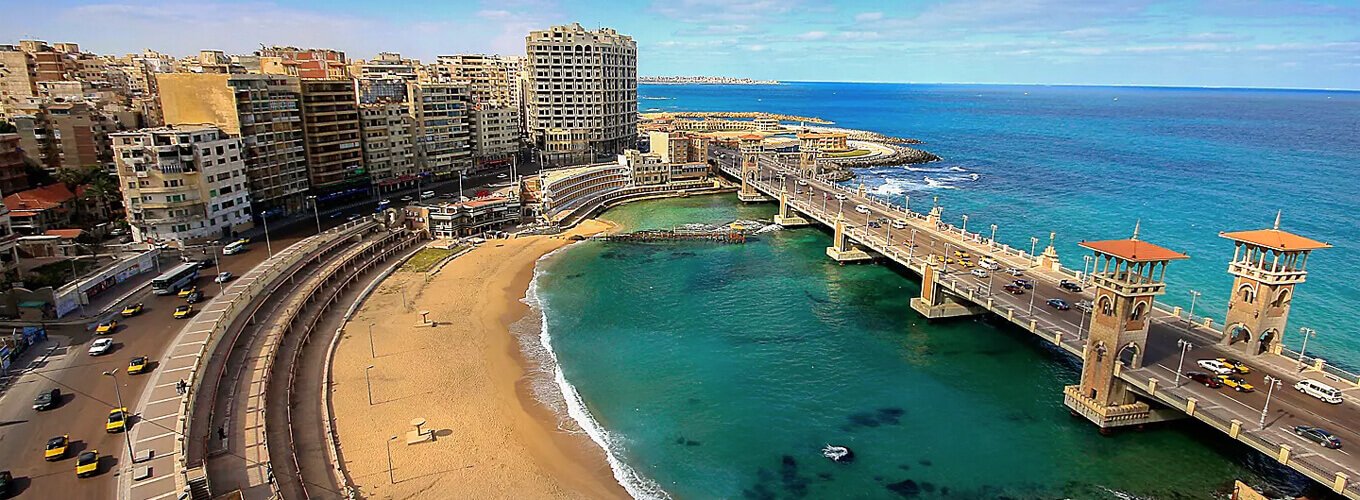
Alexandria is Egypt’s Mediterranean city, founded by Alexander the Great, known for its seafront Corniche, the modern Bibliotheca Alexandrina, the Roman Catacombs of Kom El Shoqafa, Pompey’s Pillar, the Qaitbay Citadel on the site of the ancient lighthouse, and fresh seafood.
Egypt’s second city rarely gets the fanfare of Cairo or Luxor, yet Alexandria rewards travellers who slow down and follow the sea. Founded on the Mediterranean and layered with Greek, Roman, Coptic and modern chapters, it is a place where a morning in a library archive can lead straight into an evening watching the sun sink behind Stanley Bridge. This Alexandria travel guide is built to be practical: it groups the sights into easy clusters, explains how to move between them, and shows you how to feel the pulse of the city without wasting a single afternoon on backtracking.
Think of the coastline as your spine. Almost everything worth seeing hangs off the Corniche, so once you understand that rhythm, planning your days becomes simple. Below you will find timing advice, transport options, the unmissable landmarks, where to sleep and eat, and ready-made itineraries for a short weekend.
A quick history to frame your visit
Alexander the Great established the city in 331 BCE as a strategic Mediterranean port, and that single decision set the tone for centuries to come. Through the Hellenistic and Roman periods it grew into one of the ancient world’s great centres of learning and trade, drawing scholars, merchants and ideas from three continents.
Its most famous monument, the Pharos lighthouse, was counted among the Seven Wonders of the ancient world. The lighthouse is long gone, but the Citadel of Qaitbay, raised in the 1480s, now occupies the same promontory and lets you stand where sailors once steered by that legendary beam. Layer in the Catacombs of Kom el Shoqafa, the Serapeum’s temple remains, and St. Mark’s Cathedral tracing Christianity back to the first century, and you begin to see how a single shoreline concentrated science, faith and maritime power. Reading each monument as part of this larger story, rather than an isolated stop, makes every ticket you buy feel richer.
When to go: chasing the sea breeze
Spring and autumn are the sweet spots. Days are mild, the Mediterranean light is crisp, and long walks along the Corniche feel effortless rather than exhausting. Summer heat can build sharply at midday, so if you travel between June and August, front-load your outdoor sights, ramparts, gardens and bridges, into the early morning or late afternoon.
Weekdays are noticeably calmer at the big attractions, while weekends bring lively local crowds to the waterfront. If sunset at Stanley Bridge is on your list, and it should be, arrive around 20 to 30 minutes before golden hour to claim a good rail-side spot. Sea air cools quickly after dark year-round, so pack a light layer for waterside dinners. A few neighbourhoods still experience scheduled evening power cuts, so charge your devices during the day and confirm your hotel’s backup arrangements.
Getting there and getting around
Trains from Cairo
The train is the most relaxed way to arrive. Express, VIP and Talgo services cover the run in roughly three hours with reliable air conditioning in both first and second class. Ordinary trains are cheaper but slower and may lack air conditioning, so they are best avoided in summer. There is no on-board Wi-Fi on any service, so download your maps, tickets and entertainment before you board, or bring a mobile hotspot. First-class seats cost only a little more, are wider, and have overhead racks that swallow large suitcases.
Taxis, ride-hailing and walking
Ride-hailing apps work well across the city and are usually the quickest way to hop between inland sights. For the waterfront, though, walking is half the pleasure, so stroll the scenic stretches of the Corniche and save the car for long, sun-exposed distances. At busy stations, head for the main exit for smoother pickups, as some side exits can feel chaotic.
The landmarks you should not miss
Bibliotheca Alexandrina
The modern reincarnation of the ancient library is a genuine icon. Entry uses a base ticket with small add-on fees for the Antiquities and Manuscripts museums, and there is routine security screening at the door. The soaring main reading room is worth the visit on its own, and free English-language tours are often available if you ask. Families should seek out the ALEXploratorium, a hands-on science centre inside the complex that turns a museum trip into something children actually beg to repeat.
Citadel of Qaitbay
This fifteenth-century fortress sits on the exact spot where the Pharos lighthouse once stood. Entry is ticketed, and the ramparts open up sweeping views across the harbour, an easy way to connect the present-day waterfront with the city’s ancient seafaring fame.
Catacombs, museums and gardens
Reach the Catacombs of Kom el Shoqafa early to wander the near-empty passageways and admire second-century funerary art that blends Egyptian and classical motifs; the Serapeum is a short walk away. Save time for the National Museum, which walks you through the city’s eras floor by floor, and the dazzling Royal Jewelry Museum, filled with royal treasures, nineteenth-century art and stained glass. For greenery and calm, Montaza Palace Gardens combine manicured grounds with coastal paths; a golf-cart ride or a pot of tea at King’s Tea Island is a pleasant reward for tired legs.

Where to stay
Your choice of base sets the tone for the whole trip. Stay in the city centre if you want short walks to the library and museums, or choose the beachfront for quieter mornings and relaxed evenings by the water. For a luxury option, waterfront properties such as the Four Seasons Hotel Alexandria offer both city and sea views, multiple pools, a full-service spa and a separate beach area with a kids’ play zone, which makes family logistics far simpler. Whatever your budget, ask for a higher floor to maximise views and cut street noise, and confirm reliable power backup and Wi-Fi before you commit.
- City centre: best for museum-focused, walk-everywhere trips.
- Beachfront / Montaza side: best for slower stays, sunrise strolls and families.
Eating and drinking
Alexandrian food leans hard into the sea. Order seafood mezze, grilled fish and pasta at a waterfront restaurant and share plates so you can taste your way across the table while the waves roll in. For breakfast, look for foul (stewed fava beans), falafel, fluffy omelettes and warm flatbread, filling, bright and cheap. Between sights, break up long walks with coffee stops; many cafés roast their own beans and serve pastries well into the evening. For a special night out, book a sea-view table at a hotel or seaside venue with soft live music. Alcohol is limited in some places, so expect low-key lounges, and always keep small cash for tips and independent cafés where card readers can be unreliable.
A two-day weekend itinerary
Day one: library, Corniche and a sea-view dinner
Open at the Bibliotheca Alexandrina and decide at the ticket desk whether to add the Antiquities and Manuscripts museums. Allow extra time for security checks. Afterwards, walk the Corniche at your own pace, pausing for coffee and photographs, then end the day at a sea-view restaurant, ideally at a window table, with shared seafood mezze and a pasta dish.
Day two: catacombs, citadel, museums and the sunset bridge
Arrive at Kom el Shoqafa right at opening for quiet passageways, then add the nearby Serapeum while you are in the area. Taxi to the Citadel of Qaitbay for the ramparts and harbour views, continue to the National Museum, and squeeze in the Royal Jewelry Museum if time allows. Finish by reaching Stanley Bridge 20 to 30 minutes before sunset to watch the city glow over the Mediterranean.
Travelling with children
Alexandria is an easy city for families if you alternate hands-on culture with fresh-air play. The ALEXploratorium inside the Bibliotheca is the standout indoor option, while stroller-friendly promenades along the Corniche and Montaza keep movement low-stress. In Montaza, golf carts with driver-guides help cover ground when little legs tire. A hotel with beach access and a kids’ play area simplifies downtime, and evenings work best with a calm bridge walk to wind everyone down. Keep water, hats and sunscreen handy, as the coastal breeze can mask a strong sun.
Practical tips: money, connectivity and respect
Carry plenty of small cash for ticket counters, museum add-ons and modest tips; card acceptance is patchy at smaller venues. Expect bag scanners and metal detectors at major sites, so pack light to move through lines quickly. A local SIM or mobile hotspot keeps ride-hailing apps and maps working, which matters given the lack of on-board train Wi-Fi and occasional apartment connectivity gaps. At religious sites, dress modestly with shoulders and knees covered, and carry a light scarf you can adjust at the door. Always ask before photographing people, avoid flash where it is restricted, and keep your voice low inside galleries and sacred spaces.

Final thoughts
Alexandria works best when you let the coastline lead. Spend one day looping the waterfront icons and another on the inland cluster of catacombs and museums, and you will cover the essentials without ever feeling rushed. With the logistics handled, what lingers is the atmosphere: salt air, unhurried cafés, and monuments that quietly connect you to two thousand years of Mediterranean history. Keep a little room in your bag for spice blends, roasted coffee and museum-shop keepsakes, then start planning your first walk, because the moment the sea breeze hits, the story begins.